
Stephen Schwartz’s musical Children of Eden debuted on London’s West End on January 8, 1991. However, because of the negative effects the Persian Gulf War had on tourism, the show closed only three months later. Fortunately, the musical became popular in community and regional theatres worldwide due to its ability to accommodate a large or small cast, religious subject, and its universal themes of family and love. In fact, the show’s publisher, Music Theatre International, reports that Children of Eden is one of its top 20 most frequently licensed properties. Freely based on the first nine chapters of Genesis, the show introduces the Biblical stories of the Creation, Adam and Eve, Cain and Abel, and Noah’s ark, celebrating the human spirit and family across the ages. Themes include unconditional love, hope, and second chances. Stephen Schwartz says Children of Eden is his favorite of all his musicals, some of which include Godspell, Pippen, Working, and Wicked (he also wrote lyrics to the Disney films Pocahontas, Hunchback of Notre Dame, Prince of Egypt, and Enchanted).
In November of 1999, BYU put on a performance of the musical. To fill the large cast, the music/dance/theater department invited BYU’s premier performers, the Young Ambassadors, to perform with the show, something they weren’t typically allowed to do. My brother Jason had just become a Young Ambassador, and he played the role of Cain. He and the rest of the cast were ridiculously talented, and Ellie and I saw almost every show. We fell in love with it. Jason says that almost half the cast ended up performing on Broadway, including Dallyn Bayles, who is a well-known singer/artist in LDS circles.
In November of 2023, our twins’ school announced they were going to perform the musical, and Ellie and I were ecstatic. The last few months have been brutal on the twins and the rest of the cast, but their eight performances, which they just recently concluded, made it all worth it!
The musical juxtaposes a story of the first family—Adam, Eve, Cain, & Abel—with the story of a later, parallel family—Noah, his wife, and their children Shem, Ham, & Japheth. The former ends in tragedy (Cain killing Abel) in large part because of unhealthy parenting; while the latter almost ends the same, but instead the family finds redemption as Noah learns how to better parent. “The hardest part of love is the letting go,” sings Noah as the Father (God) finally joins him, he himself having had to learn the same lesson. For my part, it is one of the greatest musicals ever written, with one of the greatest messages, perhaps bending only to that of Les Miserables.
One observation. The production recalls the temple film, not surprisingly. Talking to some attendees after the production reminded me of conversations I’ve had with latter-day saints about the temple. They have a hard time getting beyond the story—the symbol—to what the story actually tells us—the symbolized. The Genesis story was never about Adam and Eve, it was always about you and me. It’s our story. And the same goes for Children of Eden (or any good drama, or film, or book, for that matter). Some of us spend too much time grappling with how the story and characters are portrayed rather than grappling with what the story tells us about ourselves. The story is not about God or Adam & Eve, or Cain & Abel, or Noah and his sons. It’s about you and me. As the prophet Nathan said to King David after telling him a story, “Thou art the man.”
I have been having a really, really good time writing and crafting my daily, chapter by chapter, Book of Mormon notes and posts at holyenvy.com. I’d forgotten how electrifying it is to really study the scriptures deeply. Writing my thoughts down has always been a source of revelation for me—I learn so very much not just about Christ and his gospel, but about myself.
Ellie and I went to see the first three episodes of season 4 of the Chosen in the theater this past weekend. It was incredible. Director Dallas Jenkins can get on my nerves when he talks too much, but boy, can he tell a story! If I were to direct a film or TV show someday, I would want to tell stories the way he does. In any event, in the episodes, two of the apostles—Matthew and Peter—come to Jesus for counsel because each holds deep resentment for the other. What Jesus does in the film is remarkable, and I didn’t see it until Ellie pointed it out. He uses “thought-reframing”—elements of Cognitive Behavioral Therapy (CBT) and Dialectical Behavioral Therapy (DBT)—to help the two apostles face themselves and make decisions out of a clearer and cleaner understanding of the truth of the events that led to the resentment. Matthew is angry at Peter for how cruel he’s been, until Jesus helps him see that Matthew was actually the first offender, and that the position he put Peter in risked the life of Peter’s wife. Later, Jesus helps Peter see that it was through Matthew’s exacting taxes that ultimately drove Peter to find Jesus. The way the show depicts their reconciliation is stunning, as each arrives at new understanding of what it means to follow Jesus and live the principles he espouses.
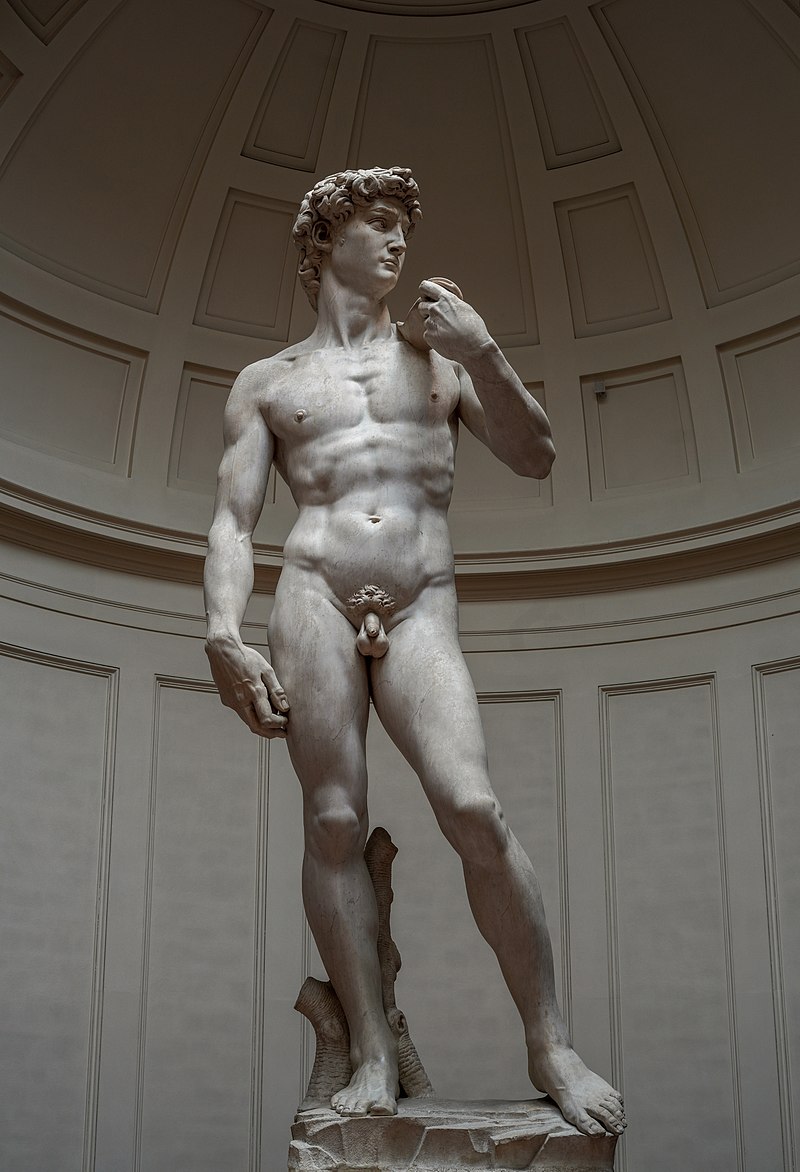
In listening this past week to a podcast, Jennifer Finlayson Fife said something that I have been thinking about a lot. Loss is fundamental to spiritual development. I think I have bought into the idea that if we live a certain way, we can avoid loss, at least real, painful loss. And if I do experience loss, I try to mitigate it in some way. Or more subtle even, I draw upon atonement theology to convince myself that no loss is actual loss, that it can be made up or healed, that all will be made whole someday. But while there is certainly some truth in that idea, the painful truth is that I just don’t like loss, and I try and avoid it almost at all costs. It’s like I reject the final stage of grief—acceptance. Somehow I think I can get around it. My point, and I think the point JFF is making, is that loss is not only inevitable, it’s necessary for our development into more whole, godlike beings. There is no way around it. There’s no other way. Those who are developed know that and can accept loss when it comes. There are some things we will never get back, some things that will never be the same. That doesn’t mean what’s next can’t be extraordinary, maybe even better, but it does means that, as Robert Frost poetically wrote, when we take a path at a fork in the road, we cannot return and get the other path back. As Frodo writes in his memoir at the end of his quest, “There are some things that time cannot mend, some hurts that go too deep.” Ironically, the loss is actually the way, it is the path. It comes because of the Fall and the gift of agency. Choice brings pain and loss; but choice also brings development and joy. There is no gain without loss, no growth without shedding something. Sometimes I think we are going about development wrong. We are trying to add things to our characters rather than stripping things away. Divinity is already within us, but, as the David statue had to be cut away from a massive block of marble, so the beauty and perfection inside of us can only be unleashed by chipping away what ought not to be there—pride, envy, hate, jealousy, covetousness, anger, and a host of other ills that plague and burden us (Alma 5:28-29). Loss is what brings us to our divinity. So our challenge is not to try and avoid loss but to learn to accept it, grieve it, and, in faith, watch what happens in its wake, watch what God makes of us in the chaos of loss.

[Above] Michelangelo’s four legendary statues at the Academia Gallery in Florence, which line the hall approaching the Statue of David. They represent some of the best examples of the iconic artist’s customary working practice of carving out the figures from blocks of marble as well as symbolic of man’s constant struggle to free the spirit from matter. [Below] Michelangelo’s David.
- “It’s more important to stand at a doorstep than a pulpit.” —Stake President Shawn Barlow, speaking on ministering, Napa Stake Conference 02/04/2024.
 Holy Envy