I’ve finally resumed my blog (a NY’s resolution…again :|). It will have three categories: (1) a daily entry for some notes on our Come Follow Me readings, (2) a weekly entry of these observations, and (3) a monthly entry of my actual blog, at least how I originally envisioned it, which will be brief essays on some topic or other (I’ve been keeping a running list of these, what I used to call “talks I may someday give” :). Already, during the last few weeks as I’ve revamped the website and caught up on some entries, I’ve been blessed by this endeavor. As it’s always been with teaching, so it seems it will be with the blog—I will likely benefit from writing it more than those who read it.
“Technical Debt” is a concept in software development that reflects the implied cost of additional reworking by having chosen an easier, or limited, solution now instead of using a better approach that would take longer. The concept exists not just in software development, however, but in all areas of life. Consider the debt that racks up when we put off chores like dishes or laundry, choose not to track our finances in real time, or rush through projects that will likely cause the need for some clean-up later. While one takeaway may be that we slow down and choose to do something perfectly from the beginning, the reality of life is that we can seldom do that, nor is it always wise. There are reasons we put off some things or do some things imperfectly. So the more practical takeaway is that we ought to plan for addressing the debt that will inevitably accumulate. Software companies on average spend 33% of their time addressing their technical debt. In other words, rather than telling their coders to get it all right the first time, which would severely stifle their creativity and growth, they just schedule time and money to deal with it. They don’t worry about the imperfection of the original work. We could take a cue from them. We will live life imperfectly, but that is the nature of the game. Rather than pointlessly trying to be perfect in the first place, instead we can schedule time to address the debt. That may be in the form of prayer or scripture study, meditation, exercise, sleep, Temple-worship, Family Home Evening, Ministering, or Sabbath-observance. Add all those together and that will amount to at least 33% of our own time, picking up the slack of stellar though imperfect living the rest of the week.
I love the complexity of the Book of Mormon. It’s the kind of thing one can’t fully comprehend without deeply studying the book; and I’ve often had a hard time conveying that complexity to others. I stumbled across this short video recently, however, that I think it does a great job at least introducing that complexity.
My family and I have been using Book of Mormon Central’s Scripture Plus app to parse out our Come Follow Me Book of Mormon daily readings. They have a great study plan that includes some insights and commentary. I reminded them, though, that there is more than what is in the Plan. One can go directly into the Book of Mormon, in this case, and read verse by verse, and at the bottom of the text, there is a section for media and commentary—far more than what is included when following the Plan alone. Some may know that the app was my baby—I introduced it to the Book of Mormon Central team some six years ago now because at the time, while they had great content online, they had yet to create a verse-by-verse reading phone app, which more and more people were preferring over their physical scriptures as well as over the internet scriptures. I spent months crafting and building out the app with the team. There is more to the story, but the result of those meetings, and there were many of them, was Scripture Plus v1.0. Though for now it is only a skeletal version of what I originally envisioned, it is still an incredibly useful tool for scripture study.
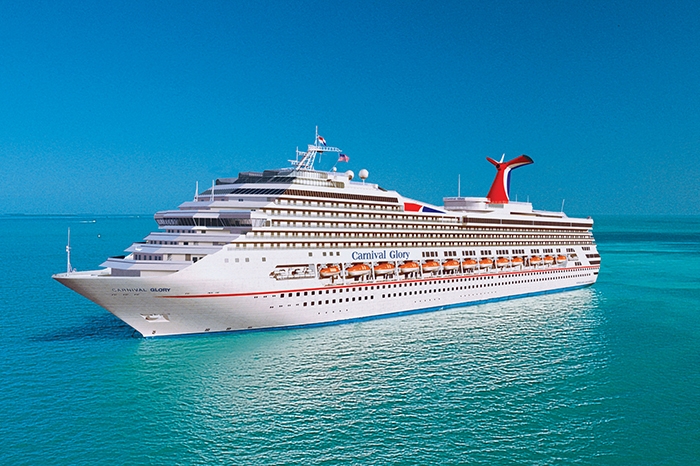
The following is redacted from a Daily Universe article from 2018. As someone recently asked me about the “Cruise-Ship Temple,” I thought I’d include this review here:
The idea of a floating temple, or a temple ship, that could provide access to remote Latter-day Saints has been around for many years. The first formal proposal for a temple ship came 50 years ago, during President David O. McKay’s presidency, in 1968. Authors Gregory A. Prince and William Robert Wright first recorded the idea of a temple ship in David O. McKay and the Rise of Modern Mormonism. According to the authors, the idea originally came from Mark Garff, chairman of the LDS Church Building Committee, in 1967. The “novel” proposal came after President McKay asked Garff to recommend “what our program should be in the matter of providing new temples and how we could accommodate our people who wish to go to the temples.”
After traveling to various remote locations with LDS populations, such as Hong Kong, Alaska and Australia, Garff calculated that around 30 percent of Latter-day Saints had no access to temples at the time and that a temple ship could potentially reach all of the remote populations. His temple ship idea intrigued President McKay, and Garff assembled a formal proposal for the First Presidency a year later on Oct. 11, 1968. The proposal offered that a thousand-ton vessel could be purchased and remodeled for $2 million and operated for about $500,000 each year, cheaper than any other temple at the time. The ship “would be able to sail both the high seas and large rivers, including the Mississippi and Missouri, and repeat its circuit every year or so,” they wrote. However, the First Presidency—then N. Eldon Tanner, Alvin R. Dyer and Joseph Fielding Smith—was “less than enthusiastic,” due to various questions of temples being built outside “Stakes of Zion,” the “cursing” placed upon the waters in the last days, and whether there should be such an urgent push for temple work “in remote places, since most of the temple work will be accomplished in the Millennium.” Two weeks later, President McKay reported that the First Presidency was not considering the proposal and “the subject was never discussed again.”
Though the temple ship is still rumored today, BYU Church History Professor Casey Griffiths—whose expertise includes Pacific church history—said the idea of a temple ship might seem “redundant” for most LDS members today. Griffiths said the “real solution” was President Gordon B. Hinckley’s smaller temples in more locations. “Smaller temples are less expensive to build, less expensive to operate,” Griffiths said. “That was a more workable solution.” During President McKay’s lifetime, there were only 13 dedicated temples. Today there are 335 temples built, under construction, or announced.
Even getting a temple ship to remote islanders would have its challenges, according to Tami Creamer. Creamer lived in Guam for about four years while her husband worked as a facilities and project manager for the LDS Church in Micronesia. According to Creamer, the prospect of an internationally traveling temple ship opens various “cans of worms,” including immigration policies, docking locations, mandatory inspections and figuring out how temple workers would run the temple. “It would be wonderful for the islanders, but at the same time … you can’t even imagine how many islands there are down there,” Creamer said. “It could be a feasibility, but I think there’s a lot of logistics that would have to be (worked out).” The LDS Church’s Temple Patron Assistance Fund provides financial aid for those attending the temple for their own endowment, but beyond that, members in Guam and other remote places are unlikely to visit the temple again—something that possibly affects continued activity in the church, Davis said.
“When they go to the temple, they are very happy to have gone,” Davis said. “However, once they return some feel that they have accomplished all they need to do in the church, and over time their activity wanes.” Creamer and Davis agree that increased access to temples could possibly raise member retention by giving members opportunities to perform ordinances for the dead as well as for themselves. “There is a great benefit in increasing the faith and spirituality of our members through regular temple attendance,” Davis said. “Thus, the idea of a floating temple to bring the ordinances of the temple to them (is important).”
Richard O. Cowan, BYU professor emeritus of church history and doctrine, said he thinks the church is most likely to stick to its current temple-building program, and if the church were to consider a mobile temple it wouldn’t necessarily be limited to a ship. Cowan concluded, “Nowadays it almost might be more likely to have them go to an idea of a flying temple.”

Quote: “Every small choice privileging authenticity—naming truths aloud despite fears, drawing boundaries not to punish but to dignify your wholeness, releasing expectations to unlock energy for what matters most—builds momentum towards reclaiming and revitalizing your spirit.” Ava Williams, Medium article on Marriage).
 Holy Envy