Part 1 of 4 – Scripture, Prayer, Sacrament/Sabbath, & Temple
“For the Spirit…gives us power, love, and self-discipline.” (2 Tim 1:7 NIV)
Truly, no work of art has impacted me more than Albrecht Dürer’s Knight, Death, & The Devil. I still own the humanities textbook in which I first saw the magnificent engraving. Take a moment to really look at it.

Called simply Der Reuter (The Rider) by Durer, the image is a detailed depiction of the quintessential medieval Christian knight—heroic, brave, and supremely moral. The knight’s journey takes him through a dark and dreary gorge where he is hounded by skulking, wraithlike creatures. Death makes a frontal attack, flashing his ominous hourglass; while the Devil lurks behind, patiently waiting to pounce upon any sign of weakness or wavering. Astonishingly, despite these near paralyzing distractions, the Rider remains resolute and undeterred in his quest to reach the distant, lofty castle.
Discipline
Discipline is the foundation of true discipleship. Indeed, “The root of the word discipline is shared by the word disciple…Jesus’s own moral discipline was rooted in His discipleship to the Father” (Elder D. Todd Christoffersen). Thus, to be a disciple of Christ is to be disciplined by Him and self-disciplined for Him.
Unfortunately, discipline strikes most of us as grim and wearisome, while distraction appears pleasant and refreshing; but these are misperceptions. Neurological studies actually show that discipline yields more pleasure as well as deeper, longer-lasting renewal than does distraction. One study found, for example, that the discipline of meditation “bathes neurons with an array of feel-good chemicals [e.g. serotonin] and effectively melts away the stress that leads to anxiety and depression.” (Ecoinstitute)
Advertisers brainwash us into reflexively associating distraction with enjoyment (as if involuntary fragmentation of attention was the definition of fun), [while, for example,] education is about having to focus and concentrate on things we find boring and unpleasant. So we end up thinking concentration=depressing and distraction=fun.
But the opposite is true according to brain chemistry: focus can trigger a big release of pleasure chemicals, whereas distraction usually inhibits this release. Meditators are aware of this, but tend to play down the pleasure-seeking aspect of meditation, describing it instead as “inner work,” which, naturally, puts most people off.
Distraction addicts often seek more and more intensity of distraction, but never feel satisfied. That’s because intensity is a state of mind, not an external pursuit. As a mental state, it’s closer to focus than distraction. In other words, the best thing for thrill-seekers is to sit in a quiet room learning how to concentrate! (Anxiety Culture Webzine)
Thrill-seeking and chemical baths aside, discipline’s spiritual payoff is incalculable. With it, we can do almost anything; while without it, we can do almost nothing, at least deliberately. Its presence enables us to act as true agents, while its absence disables us into being acted upon as veritable impotents, like “wave[s] of the sea, driven by the wind and tossed” (James 1:6; 2 Ne. 2:14).
Importantly, discipline is not willpower. While we certainly must exercise our agency to act (D&C 58:27-29), we do not need the superhuman self-mastery so many think is necessary. Instead, all we need is the will to put some rather simple things into practice (“disciplines”), and then the power of discipline will come naturally as a consequence (D&C 130:20-21). In other words, willpower, self-mastery, and discipline are not choices, they are consequences—they are the natural byproducts of doing simple things often. As President Henry B. Eyring once taught,
“Most of us have had some experience with self-improvement efforts. My experience has taught me this about how people and organizations improve: the best place to look is for small changes we could make in things we do often. There is power in steadiness and repetition. And if we can be led by inspiration to choose the right small things to change, consistent obedience will bring great improvement.” (“The Lord Will Multiply the Harvest”)
Similarly, President Heber J. Grant often quoted:
“That which we persist in doing becomes easier for us to do—not that the nature of the thing is changed, but that our power to do is increased.” (Gospel Standards 355, attributed to Ralph Waldo Emerson)
For my part, this is an important point because while church leaders have discussed the importance of self-discipline (e.g. D. Todd Christoffersen, “Moral Discipline”; James E. Faust, “The Power of Self Mastery”; Boyd K. Packer, “Agency and Control”), they have seldom discussed how we can actually develop it, inadvertently suggesting that if we were to try hard enough, willpower could simply be mustered up from deep within—an idea at once both unhelpful and frustrating.
Let me suggest the following eight “disciplines” as foundations on which to reformat habitually distracted lives into spiritually disciplined ones:
- Scripture Immersion
- Submissive Prayer
- Full Sway Sacrament & Sabbath
- Consistent & Committed Temple Worship
- Practicing Meditation & Mindfulness
- Living Mission-Driven
- Educating Our Desires
- Sacrilizing Life
Some of these are simple, but none are simplistic. Remember that the Lord works by “small and simple things…to bring about his great and eternal purposes” (Alma 36:6-7; see also D&C 89:3), while we tend to look “beyond the mark” for “some great thing” as did Naaman (2 Kgs. 5:13; see Jacob 4:14). As a result, we risk overlooking that which is right before our eyes.
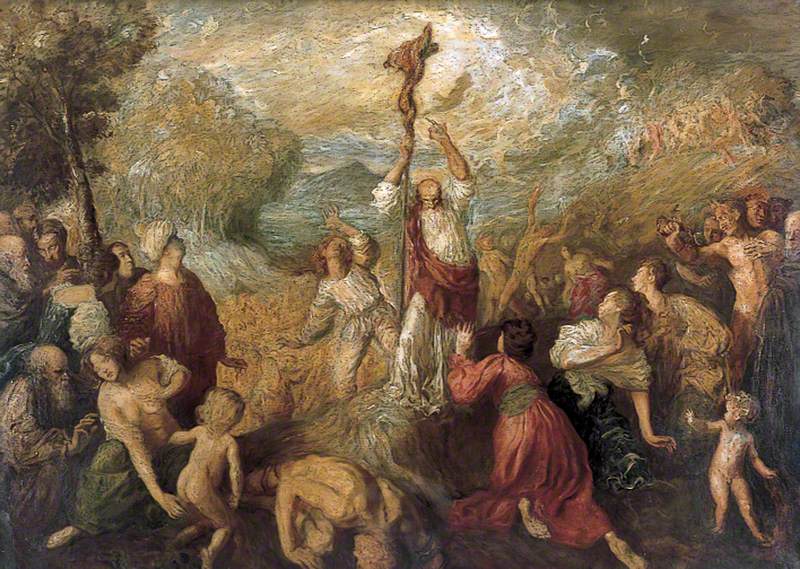
Do not underestimate the power of simple things. Most of what the Lord asks of us is simple, “adapted to the weak and weakest of all” (D&C 89:3). The test of faith is not the challenge to do the extraordinary but the humility to do the ordinary, and to do it well. Thus, in reading what follows, consider small changes you can make in any of these simple practices.
1. Scripture Immersion
Consistently immersing ourselves in scripture combats distraction by attuning our minds to Gods’ and prophets’ points of view. Total immersion in the word of God was forcefully stressed by Moses when the children of Israel entered the promised land:
“And thou shalt teach them [the scriptures] diligently unto thy children, and shalt talk of them when thou sittest in thine house, and when thou walkest by the way, and when thou liest down, and when thou risest up. And thou shalt bind them for a sign upon thine hand, and they shall be as frontlets between thine eyes. And thou shalt write them upon the posts of thy house, and on thy gates…lest thou forget” (Deut. 6:7-9, 12).
In a way, distraction is forgetting, and scripture has a way of helping us remember the things of greatest worth; but to be immersed, we must read them:
- Daily (at a set time, for a good amount of time, and generally at the cost of something else we could otherwise be doing),
- Deeply (we are actually never commanded in the canon to “read” scripture, but instead to “search,” “feast,” “hold fast,” “treasure up,” “rely upon,” “live by,” even “delight in”), and
- Directly (from the source, as opposed to pseudo-canon such as church magazines, books, spiritual thoughts, or the like).
Just as vegetables will have virtually no effect on our bodies if consumed sporadically, only nibbled, or in veggie chips (versus daily, deeply, or directly); so scripture will have no lasting effect on our souls when likewise consumed.
However, if we immerse ourselves in scripture daily, deeply, and directly, the word will affect our minds more powerfully than the sword (Alma 31:5), will shield us against distracting deceptions and snares (JS-M 1:37; Hel. 3:29), and will make us “firm, steadfast…and unshaken” (Hel. 15:7-8; Jac. 4:6). As with the iron rod, the word may be the only thing that will keep the faithful rooted to the strait and narrow in the face of the dizzying distractions unleashed by “the world and the wisdom thereof.” (1 Ne. 11:35; 15:24; Hel. 3:29-30; 2 Tim. 3:15).
President Spencer W. Kimball taught that the scriptures kept even him grounded,
“I find that when I get casual in my relationships with divinity and when it seems that no divine ear is listening and no divine voice is speaking, that I am far, far away [sounds like distraction], if I immerse myself in the scriptures, the distance narrows and the spirituality returns” (Teachings 135).

If a prophet needs scripture to help keep even him from being distracted by the world, how much more need have we! (2 Ne. 31:5)
Elder Bruce R. McConkie taught that “People who study the scriptures get a dimension to their life that nobody else gets and that can’t be gained in any other way” (Church News, 24 January 1976, p. 4). Book of Mormon prophets affirmed the same (Alma 37:8-10; Mosiah 1:3-5). That dimension is what I call the God-paradigm. We begin to see things the way He sees them, the way they really are. I have experienced this and know it is true. Indeed, I cannot overstate the benefits of possessing this divine frame of reference, nor the fact that it comes only from immersing oneself in the Word. There is no other way to access this mighty bulwark against seductive but ultimately dead-end distractions.
2. Submissive Prayer
True prayer is not simply, as we sing, the expression of the soul’s sincere desire (Hymn #145); rather, it is the expression and then submission of that desire. “Prayer is the act by which the will of the Father and the will of the child are brought into correspondence with each other.” (BD “Prayer”) This may be why Paul taught that true prayer involves “groanings which cannot be uttered” (Rom. 8:26). We groan because we are engaged in a brutal inner battle against the natural man, striving to yield our selfishness to selflessness. “The greatest battles ever fought are fought in the silent chambers of the human mind,” taught President David O. McKay (CR Oct. 1954). It is why Enos and other prophets have called prayer a “wrestle” (Enos 1:2).
The Savior gave us a perfect model of submissive prayer in Gethsemane, beginning his Expiation with unvarnished expression: “O my Father, if it be possible, let this cup pass from me,” but ending it with unconditional submission, “nevertheless not as I will, but as thou wilt” (Matt. 26:29); or as Abinadi taught, “the will of the Son [was] swallowed up in the will of the Father” (Mosiah 15:7). The Savior’s groanings involved infinite suffering, “which suffering caused myself, even God, the greatest of all, to tremble because of pain, and to bleed at every pore, and to suffer both body and spirit” (D&C 19:18); or as Luke wrote, “being in agony, he prayed more earnestly: and his sweat was as it were great drops of blood falling down to the ground” (Luke 22:44).
When have you prayed like that?
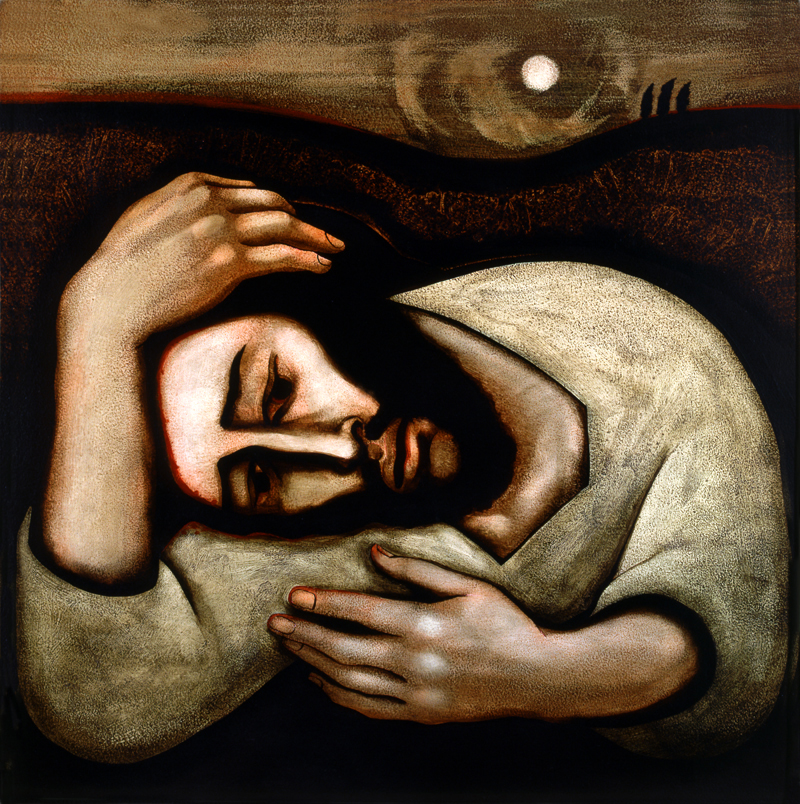
Likely, most of our prayers are nothing like that. Again from the Bible Dictionary:
We pray in Christ’s name when our mind is the mind of Christ, and our wishes the wishes of Christ—when his words abide in us (John 15:7) . . . Many [so-called] prayers remain unanswered because they are not in Christ’s name at all; they in no way represent his mind, but spring out of the selfishness of man’s heart.”
Isn’t that much more like how we pray? We want something, so we pray and ask for it. Or we are grateful for something, so we express it. Assuming our desires are righteous and our gratitude genuine, there is of course nothing wrong with either of those expressions; but they are not true prayer in the strict sense unless they reflect God’s wishes for us, unless we are engaged in the process of figuring out what He wants and then making those wants our own. This means we first pray “Thy will be mine,” and only after that is accomplished, “Thy will be done!”
That kind of prayer transforms us. We become disciples in the truest sense, so assiduously dedicated to the Lord that we can hardly be distracted from our march towards the Tree. Since prayer, then, is quite literally the act of renouncing the world (both within and without), it serves as a potent antidote for worldly distraction.
Alas, the reality is that more of us “say prayers,” than actually “pray.” We “multiply many words” (3 Ne. 19:24) and “draw near with [our] lips,” but, as the Lord laments of us, “their hearts are far from me” (JS-H 1:19).
Submissive prayer humbles, awakens, reorients, and refocuses us. As a mechanism to receive direction, submit, commit, and later return and report, it is unrivaled as an aid to keep us on task. For this reason, we are commanded to pray day and night (Alma 37:37), even always (D&C 10:5; 3 Ne. 18:15-19).
Are you really, truly praying?
3. Full Sway Sacrament & Sabbath
Each week we enter the Savior’s tomb where we commemorate his burial and resurrection with fellow disciples through an emblematic meal, funeral dirges, and memorial talks. The experience can be extraordinarily powerful for something so simple; but like prayer and scripture study, it may be gravely underutilized. Here we have a chance to remember all that Jesus did for us, watch it played out symbolically right before our eyes, and feel motivated to get back from our wanderings, re-grasp the rod, and reset our compasses towards Him who is the Tree. The power we receive from participating in the memorial, however, is directly proportional to the soul-depth we are willing to plumb as we both prepare and participate.

When my father died, I was assigned to speak at his funeral. In both my preparation and presentation, I reviewed his life and character; and in the end, I felt incredibly motivated to be like Him, to do the good things he had done and be the kind of good person he was. The whole experience affected me so deeply that to this day, all I ever really want is to live a life that will honor his name. Many feel this when someone close to them dies. More feel it when a life is given as a sacrifice for another (such as is often the case with soldiers or law enforcement officers). Why do we not feel each week 10 times that, or 1000 times that, for the Savior? Did not Isaiah say “he was wounded for our transgressions, he was bruised for our iniquities; the chastisement of our peace was upon him; and with his stripes we are healed” (Isaiah 53:5)?
Perhaps we are there at the meeting, but not really there at the sepulcher. What do you see when you look over at the sacrament table, when the sheets are pulled back, when the emblems rise, and when they approach you and the rest of the congregation “one by one” (3 Ne. 11:15)?
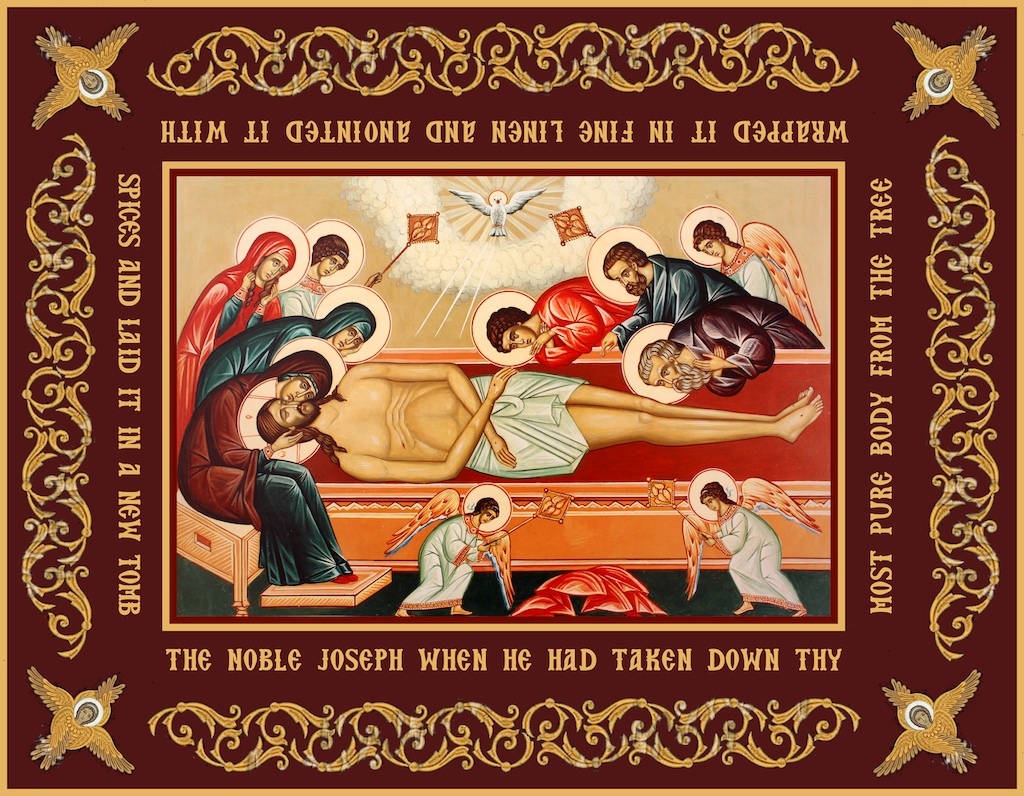
If, during the ordinance, we were to truly “let the justice of God, and his mercy, and his long suffering have full sway in [our] heart; and let it bring [us] down to the dust in humility” (Alma 42:30), we would harness far more power from that weekly experience than we currently do.
And yet, to partake of the sacrament accordingly but then later dishonor the Sabbath by engaging in worldly distractions is both disingenuous and counterproductive. The Sabbath is the very law Father instituted “that thou mayest more fully keep thyself unspotted from the world” (D&C 59:9). What kind of rest, reorientation, and protection against worldly distraction could we expect if we were to scorn the very law Father provided for such blessings? “The world is too much with us; late and soon, Getting and spending, we lay waste our powers” (William Wordsworth). Contrarily, honoring the entire Sabbath will magnify Father’s sacramental promise that the Spirit might always be with us.
Notably, while Father invites us to “offer up thy sacraments upon my holy day,” He also commands that “thy vows shall be offered up in righteousness on all days and at all times” (D&C 59:9-11). What does He mean by this? How does Father expect us to make the weekly Sabbath a part of our daily experience?
If we can make our sacraments more meaningful and our Sabbaths more “honourable,” the Lord promises that He will cause us to “ride upon the high places of the earth” (Isa. 58:13-14), far above the distractions that could otherwise derail us.
4. Consistent & Committed Temple Worship
An LDS temple is to a chapel as Mecca is to a mosque, St. Peter’s to a parish, or Jerusalem’s Temple Mount to a local synagogue. In most faiths, a pilgrimage to their most holy sites is a once in a lifetime experience; but for many latter-day saints, because temples are rising throughout the earth with increasing rapidity, the exceptional can (and should) become the habitual.
As the temple is quite literally our Father’s house (John 2:16), entering one is like returning to the family home after being away for many months or even years. Reminded of our roots and restored to our identity, we feel refreshed, reoriented, and renewed in our determination to stay the course as we head back into the world.
Years ago I was invited by a friend to attend the temple with him weekly; now I can’t imagine how I stayed on course when I was attending only monthly. Whatever our schedules, it is likely possible that we can attend more regularly than we do now if we are willing to give up some of the things that matter to us for the things that matter so much more. The First Presidency has invited us to do just that:
“We are grateful for the increased availability of temples worldwide and invite adult members to have a current temple recommend and visit the temple more often. Where time and circumstances permit, members are encouraged to replace some leisure activities with temple service.” (First Presidency Letter, 11 March 2003)
Temple attendance places distractions into the perspective of the Plan of Salvation, whereby they shrink into relative insignificance when compared with the the things of eternity. Still, that perspective will become the dominant one in our minds and hearts only if we attend the temple consistently and often. As Elder David A. Bednar taught, “There is a difference between church-attending, tithe-paying members who occasionally rush into the temple to go through a session and those members who faithfully and consistently worship in the temple” (“Honorably Hold A Name and a Standing”). What is the difference Elder Bednar sees? Have you seen that difference in others?
Like the Sabbath, the Lord actually invites us to experience the temple daily by, unbelievably, allowing us to take a part of the temple with us when we leave; and it is one of the temple’s most sacred furnishings—the veil!
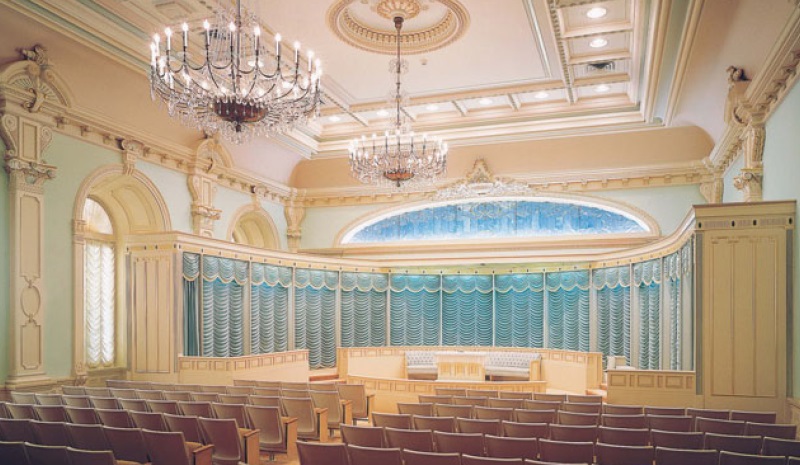
Paul taught that the veil represents Christ’s flesh (Hebrews 10:19-20), through which/whom we “enter into the holiest,” or the Celestial Room in today’s temples; so the fact that the veil is given to us in the form of the garment seems appropriate, since the garment made for Adam and Eve would have been made from the skins of an animal sacrificed in similitude of the Only Begotten (Moses 4:27; 5:6-7). Thus, when we wear the garment as we leave the temple, we are covered in Christ. Note what President Russell M. Nelson taught about the Hebrew word for atonement as it relates to being covered by the garment:
Rich meaning is found in study of the word atonement in the Semitic languages of Old Testament times. In Hebrew, the basic word for atonement is kaphar, a verb that means “to cover” or “to forgive.” (We might even surmise that if an individual qualifies for the blessings of the Atonement through obedience to the principles and ordinances of the gospel, Jesus will “cover” our past transgressions from the Father.) Closely related is the Aramaic and Arabic word kafat, meaning “a close embrace”—no doubt related to the Egyptian ritual embrace. References to that embrace are evident in the Book of Mormon. One states that “the Lord hath redeemed my soul…I have beheld his glory, and I am encircled about eternally in the arms of his love” (2 Ne. 1:15). Another proffers the glorious hope of our being “clasped in the arms of Jesus” (Morm. 5:11; additional examples are in Alma 5:33; Alma 34:16). I weep for joy when I contemplate the significance of it all. To be redeemed is to be atoned—received in the close embrace of God with an expression not only of His forgiveness, but of our oneness of heart and mind. What a privilege! (“The Atonement”)

The symbolism of the garment is truly extraordinary! As President Nelson noted, we are figuratively clothed in Christ and experience at least the following blessings:
- We are cleansed and sanctified from sin (“having [our] garments made white, being pure and spotless before God” Alma 13:12; “being clothed with purity, yea, even with the robe of righteousness” 2 Ne. 9:14; “he hath clothed me with the garments of salvation” Isa. 61:10),
- We are protected from the full consequences of our iniquities (“your life is hid with Christ” Col. 3:3),
- We are shielded from the blood (i.e. sins) of the world (“by laboring with our might their blood might not come upon our garments” Jacob 1:19; 2 Ne. 9:44),
- We are armed and armored for battle against the forces of the adversary (“Put on the whole armor of God…” Eph. 6:11; “put on the armor of light” Rom. 13:12; “put on thy strength, O Zion; put on thy beautiful garments” Isaiah 52:1; “that thy servants may go forth from this house [temple] armed with power” D&C 109:22; see Luke 24:49),
- We are are wrapped in Christ’s loving embrace (“mercy…encircles them in the arms of safety” Alma 34:16; also 2 Ne. 1:15; Morm. 5:11; Alma 5:33).
- We take upon us Christ’s name, becoming his children and his heirs. While we covenant to be “willing” do this at baptism (2 Ne. 31:13; Moroni 4:3; Mosiah 26:18), Elder Dallin H. Oaks suggested that it is in the temple where we do this more fully, alluding to being clothed with the garment (“Taking Upon Us The Name of Christ”). The prophet Joseph also taught that we take upon ourselves Christ’s name in the temple (D&C 109:22). And finally,
- We become one with Christ, we become like Him; indeed, we become Him (“put ye on the Lord Jesus Christ” Rom. 13:14; “put on the new man…after the image of him that created him” Col. 3:10; “deck thyself now with majesty and excellency; and array thyself with glory and beauty” Job 40:10).
In addition to the fact that the garment proper is highly symbolic, both the veil and the garment are etched with marks that remind us of our covenants and that any and all covenant blessings are contingent upon our faithfulness. We are specifically invited in the Initiatory ordinance to remember, honor, and live those covenants throughout our lives.
In sum, every day as we put on the garment, we are invited to have a deeply spiritual, temple-like experience—remembering, renewing, being empowered, and feeling the Lord’s embrace. And the fact that we wear it throughout the day means that the garment can actually be a constant, even moment to moment reminder. How could we ever be distracted by the petty and the paltry, the trivial and the trifling, if we were constantly considering the rich symbolism of the garment and the temple experience it recalls? How could we not stay on an undeviating course leading to eternal life?
If you have received your endowment, are you regularly, daily, even constantly harnessing the power of the temple you carry with you?
Part 1: 1. Scripture Immersion, 2. Submissive Prayer, 3. Full Sway Sacrament & Sabbath, 4. Consistent & Committed Temple Worship
Part 2: 5. Meditation & Mindfulnes, 6. Living Mission-Driven
Part 3: 7. Educating Desires
Part 4: 8. Sacralizing Life.
 Holy Envy