“For the Lord seeth not as man seeth…” (1 Sam. 16:7)

– Why This Blog –
See that? Don’t miss it…look up again. THAT is why I am writing this blog. It is for them. (Mosiah 4:14-15; D&C 68:25-28; Moses 6:57-58; Ps. 78:4-8; 2 Ne. 25:26; see TG Family, Children, Responsibilities toward)
I have very little literary gift, much less time, and even less desire to draw attention to myself; but I feel motivated by an overwhelming desire to share with my six children the things of my soul—the truths which the Lord has revealed and continues to reveal to me—so that they “may learn to be more wise than [I] have been” (Mormon 9:31) and “might not be as their fathers, a stubborn and rebellious generation” (Ps. 78:8). They are still young, but they won’t always be young; and perhaps some of my students, friends, and extended family might also find value in these posts.
C.S. Lewis once shared sentiments that mirror my own:
“This is not a work of scholarship…I write for the unlearned about things in which I am unlearned myself…I write as one amateur to another, talking about difficulties I have met, or lights I have gained…with the hope that this might at any rate interest, and sometimes even help, other inexpert readers. I am ‘comparing notes,’ not presuming to instruct…The thoughts it contains are those to which I found myself driven.” (C.S. Lewis, Reflections on the Psalms. New York: Harcourt, Brace and Co., 1960, pp. 1–2)
Recently, I have felt impelled to consider more deeply, organize more fully, and share more widely “lights I have gained.” Almost always they were about new perspectives more than new information—changes in paradigm that provoked changes in my behavior. I kept brief notes of them, jotting down the ideas and even creating skeletal outlines of what I envisioned becoming TED-like talks I’d someday give. Alas, I am now only three years younger than my father when he died (at 49), and I am realizing I will never give these talks. Seriously, when was I thinking to give them anyway?
Importantly, these will be more than musings. As I see such an endeavor as one avenue to both love and worship God, I intend to think, craft, and write with all of my “might, mind, heart, and strength” (Matt. 22:37-39), such as they are.
Finally, I have two caveats. First, I subscribe to Harold B. Lee’s exhortation that all we teach ought to be couched in the scriptures (Teachings, 59-68), thus I will include a plethora of scriptural references. I have made them linkable, so please use them! Second, I believe that in learning, questions are more important than answers; so I will pose them. Please take time to respond, if only inwardly.
Framework
The following seven principles are the scaffolding around which this blog will be built. They form a subtext I intend to model with each post.
- God seeks an intimate, conversational relationship with each of His children.
The scriptures are replete with the idea that God seeks to draw near to us (Zech. 1:3; James 4:8; Rev. 3:20; D&C 88:63; Jacob 6:4-5), speak with us (Isa. 1:18; D&C 50:10), reveal truth to us (John 14:26), and even abide with us (John 14:23). No commandment is repeated more often in scripture than, “Ask, and ye shall receive” (D&C 4:7, see Boyd K. Packer, Prayers & Answers). The Book of Mormon especially is full of examples of revelation through dialogue (see Teryl Givens, Dialogic Revelation). In the temple, God invites us to converse with Him through the veil not so much as a one-time experience but as a model for what we ought to be doing every day.
Indeed, God commands us to “counsel” with Him about almost everything that concerns us (Alma 37:37; 34:18-27). Incredibly, He actually “delights” in our company and conversation, more especially when we are as interested in receiving His instructions as He is in sharing them with us (D&C 41:1; 76:5; 2 Sam. 22:20; Prov. 15:8; 2 Chr. 1:11-12; Matt 7:7, 11). All are invited to share in this divine intimacy (2 Ne. 26:33). And even when we are less than worthy, God “strives” with us so He can maintain that connection as long as possible (Gen. 6:3; 1 Ne. 7:14; Ether 2:25).
This blog will largely be a record of my own, ongoing conversations with the Lord—how He has reasoned with me, taught me, and given me needed, timely insight—if, of course, still filtered through my own imperfect expression.
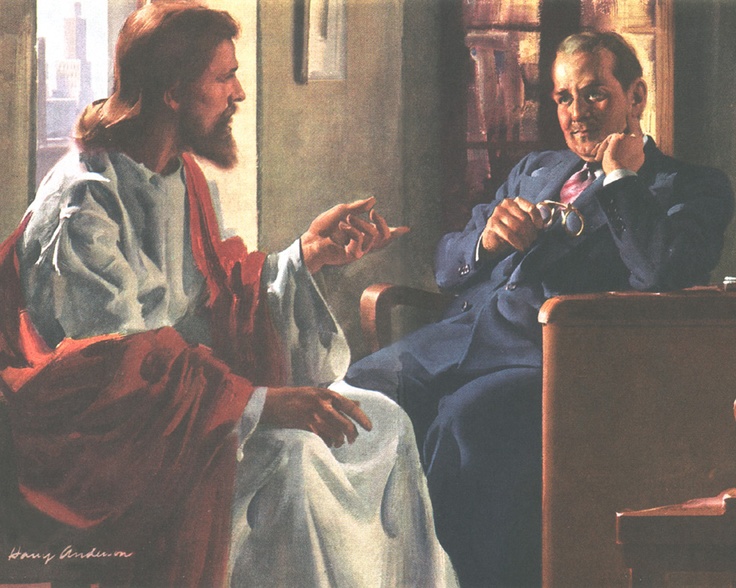

What have you and the Lord been discussing lately?
- We are changed more by new paradigms than by new information—by adjusting how we see more than by what we see.
Author Steven Covey shares an experience about riding a New York City subway train one Sabbath morning and struggling unsuccessfully to be patient with a gentleman who was not controlling his unruly children. Eventually, the man told Covey that they had just come from the hospital where his wife had died. Covey’s anger and resentment, so difficult to control at first, were instantly replaced with compassion and empathy. It was a “quantum change” that came not from adjusting his attitude or behavior but from a complete paradigm shift (7 Habits; see also 6 Events: The Restoration Model For Solving Life’s Problems).
There are many examples in scripture of both the dangers of limited perspective (Isa. 53:2; John 1:45-46; Matt. 13:13-15) and the power of an expanded one (2 Kgs. 6:15-17; D&C 121:10; 122:8). The Lord himself cautions us that He sees things from an altogether different paradigm (Isa. 55:8-9; 1 Sam. 16:7; 1 Cor. 2:5, 9-11; D&C 58:2-4). When we see as He sees, everything changes!
My aim will be to present paradigm changes, or at least new perspectives—variations on a theme if you will—all to the end of “quantum change” as Covey calls it. Nothing less deserves my time and attention, or yours.


When has your own changed paradigm made a challenge easier to overcome?
- The Plan of Salvation paradigm yields the greatest, truest, and most helpful perspectives.
Elder Neal A. Maxwell spoke often of the “precious perspective” of the gospel and the Plan (The Great Plan of the Eternal God). President Boyd K. Packer compared God’s Plan to the three-act structure of a play, noting how confusing it would be to show up as a participant in Act II (mortality) with no knowledge of Act I (pre-mortality) or III (post-mortality) (The Play And The Plan). The paradigm of the Great Plan of Happiness (Alma 42:2, 5) gives purpose to every aspect of life. Alma taught that even God himself gave men commandments anciently only “after having made known unto them the plan of redemption” (Alma 12:32), likely because the paradigm of the Plan reveals the why of all the what, giving mankind a reason for obedience and sacrifice.
The reader should know that the Plan is my weltanschauung—my world view—and it is, for my part, the truest perspective of reality. In short, it is reality…it is true.
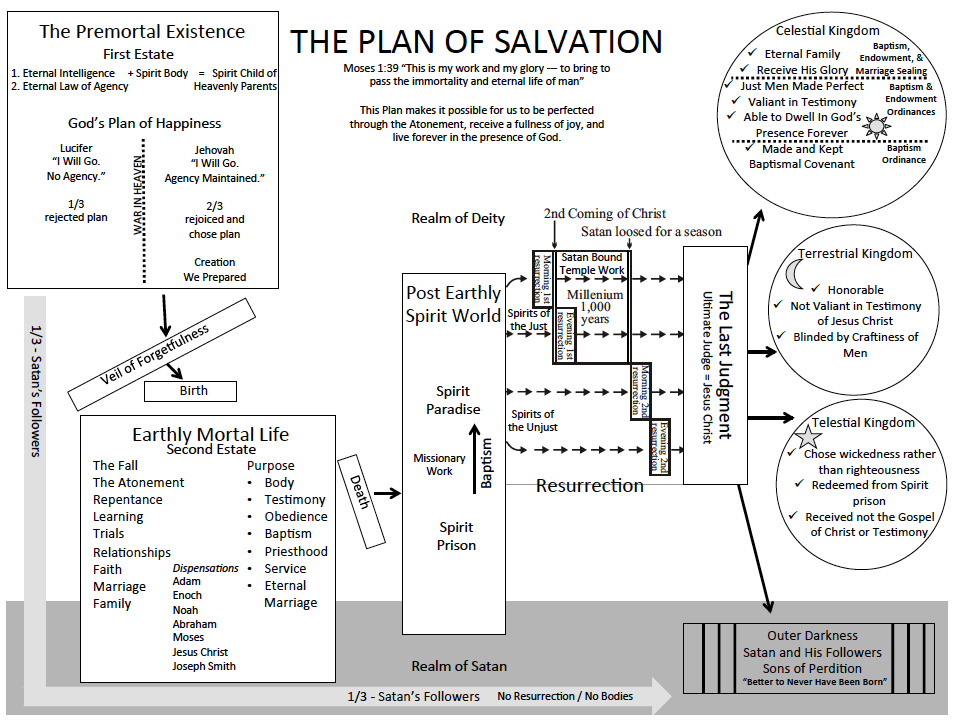
How has the grand perspective of the Plan of Salvation blessed your life?
- Nothing is worth learning unless we act on what we learn; and while learning may be enjoyable, acting can be painful.
The Prophet Joseph Smith’s First Vision came, in part, because he was willing to act on what he would learn, despite the consequences (JS-H 1:12, 18, 21-26). The Savior taught that growth and testimony come from acting (John 1:39; 7:17), that condemnation comes from learning without acting (2 Ne. 31:14), and that God mercifully withholds knowledge from those who will not act (Matt. 13:14-15; see also 2 Ne. 28:30; Alma 12:10).
Accordingly, I invite all who read to do so with the intent to act. I am not writing to set off a cerebral thrill (as if I could do such a thing anyway); rather, as the title of this blog intimates, I am writing to aid fellow disciples in our quest for perfection and eternal life (Matt. 5:48; D&C 14:7). And while we who seek to act will experience both difficulty and delay—for the “spirit is willing, but the flesh is weak” (Matt. 26:41)—it is utterly imperative that we never, ever give up!

What has the Lord revealed to you that you have yet to act upon?
- We progress fastest when we assiduously “observe” and learn from our own and others’ experiences.
The Plan of Salvation is based on the fundamental idea that mortality provides us “a breadth, a depth, and an intensity of experience that simply could not be obtained in our premortal estate” (David A. Bednar, Things As They Really Are). Even Jehovah came into mortality incomplete because there were things He had to learn “according to the flesh” (Alma 7:11-13; D&C 93:12-14).
And yet, not all learn equally well from their experiences. In one of Mormon’s most notable reflections, he remarks that because of the exceedingly great length of the war, “many had become hardened” but also that “many were softened” (Alma 62:41). The difference may be that of inspired observation, as taught by Elder Bednar:
“Please consider the significance of this important spiritual gift. As used in the scriptures, the word observe has two primary uses. One use denotes ‘to look’ or ‘to see’ or ‘to notice’—as we learn in Isaiah 42:20…The second use of the word observe suggests ‘to obey’ or ‘to keep’…(D&C 54:6). Thus when we are quick to observe, we promptly look or notice and obey. Both of these fundamental elements—looking and obeying—are essential to being quick to observe. And the prophet Mormon is an impressive example of this gift in action.” (Things As They Really Are)
It may have been primarily because of this gift that Mormon was chosen to record the Nephite history (Morm. 1:2-4). Perfect observation must also have been a key component in Jesus’ progression (Mark 12:41; D&C 93:12-14), something He could have learned from his mother (Luke 2:19).
We, too, must be astute observers, both to learn and to obey. These posts will be a reflection of my own attempts to learn from observation.

What have you learned recently by revelatory observation? What have you missed?
- Revelation comes as we work for it.
In his history, the Prophet Joseph Smith describes an intense and prolonged struggle before receiving his First Vision, “laboring under the extreme difficulties caused by the contests of these parties of religionists,” during which time he studied scripture, attended meetings, and had discussions with various religious leaders (JS-H 1:8-11).
Nephi (1 Ne. 11:1), Enos (Enos 1:4), Alma (Alma 5:46), Jacob (Gen. 32:24-30) and so many others in scripture prayed, pondered, fasted, and even wrestled for long periods of time before receiving the revelation they sought.
I too have struggled and expect to continue to struggle to clearly grasp, conform to, and then convey the paradigm shifts in these posts; and I invite the reader to join me. Seldom does something of value come without commensurate cost.

What needed, personal revelation are you willing to wrestle for right now?
- Recording revelation signifies gratitude, helps us remember, and makes further revelation more likely.
Brigham Young taught, “If you love the truth you can remember it.” (JD 3:358). One can remember by simply not forgetting; but one can also remember by recording—in effect, ensuring something will never be forgotten.
Some time ago I noticed that I was forgetting the particulars of many epiphanies, just as I would the details of once vivid dreams. Moreover, when I could recall them, they were only sparks of ideas anyway. Evidently, Father expected me to fan the flame by working out an idea’s full implications so that the spark of brief insight could become the blaze of a powerful new paradigm. Recording was the key to beginning such a process.
Consider what Elder Richard G. Scott taught about recording personal revelation:
“I believe that you can leave the most precious, personal direction of the Spirit unheard because you do not respond to, record, and apply the first promptings that come to you.” (To Acquire Spiritual Guidance)
“Recording will also enhance our ability to recall revelation.” (How to Obtain Revelation and Inspiration for Your Personal Life)
“Knowledge carefully recorded is knowledge available in time of need. Spiritually sensitive information should be kept in a sacred place that communicates to the Lord how it is treasured. That practice enhances the likelihood of receiving further light. Powerful spiritual direction in our lives can be overcome or be forced into the background unless we provide a way to remember it.” (Acquiring Spiritual Knowledge)
The Prophet Joseph taught something similar:
“For neglecting to write [spiritual directions] when God had revealed them, not esteeming them of sufficient worth, the Spirit may withdraw and God may be angry.” (From minutes of instruction to the Council of the Twelve, February 27, 1835; HC 2:198–99)
This blog constitutes one way I am recording the things Father has communicated to me.
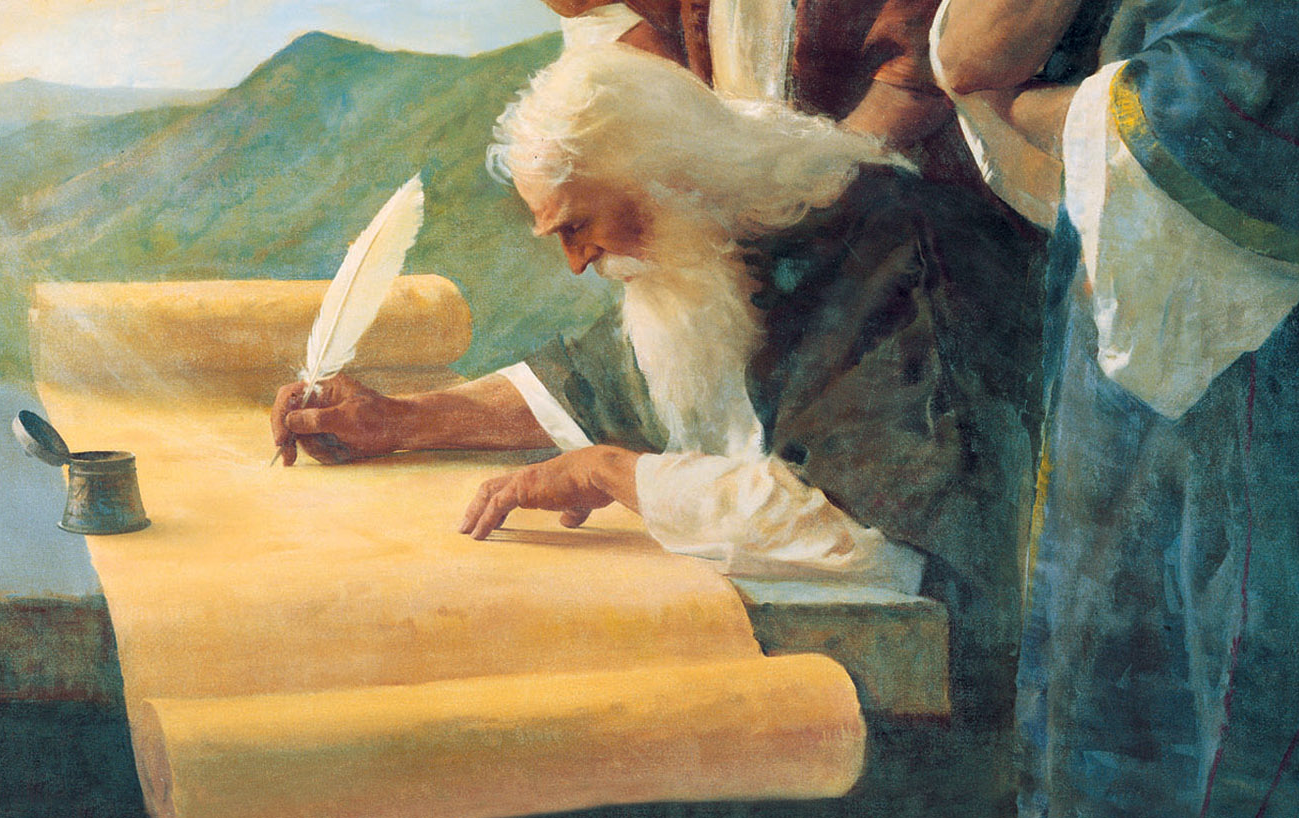
How and where will you record your conversations with the Lord?
Divine Tutoring
One of the grand mysteries unleashed in the Restoration is that God is our actual, literal Father and that we are His work and His glory (Moses 1:39; D&C 132:63). Elder Neal A. Maxwell taught:
“God has no distracting hobbies off somewhere in the universe. We are at the very center of His concerns and purposes.” (How Choice A Seer!)
Indeed, mankind is His business (Jacob Marley, A Christmas Carol). Accordingly, we can enjoy a most incredible relationship with Him. He will partner with us during our mortal sojourn, wherein He will fill us with the “spirit of truth,” teach us “all things,” and “abide with [us]” (John 14:16-26; 2 Ne. 32:2-3). As our partner in progression, He will tutor, discipline, refine, and nurture us all our lives. He will, in effect, prepare us in all things to return to His presence.
President Brigham Young taught:
“There is no doubt, if a person lives according to the revelations given to God’s people, he may have the Spirit of the Lord to signify to him his will, and to guide and to direct him in the discharge of his duties, in his temporal as well as his spiritual exercises. I am satisfied, however, that in this respect, we live far beneath our privileges.” (JD 12:104)
With the new year, perhaps now is the time to become the receptacles of revelation Father designed us to be!

 Holy Envy